Safety Signs and Warning Signage for Worksites and Factories in Jordan: EAPPress Guide
At EAPPress in Russeifa, Zarqa, print planning starts with the purpose of the finished piece and the available budget. This guide covers Safety Signs and Warning Signage for Worksites and Factories in Jordan and helps businesses in Jordan prepare a clear specification before requesting a quote.
Why do work sites in Jordan need professional safety signage?
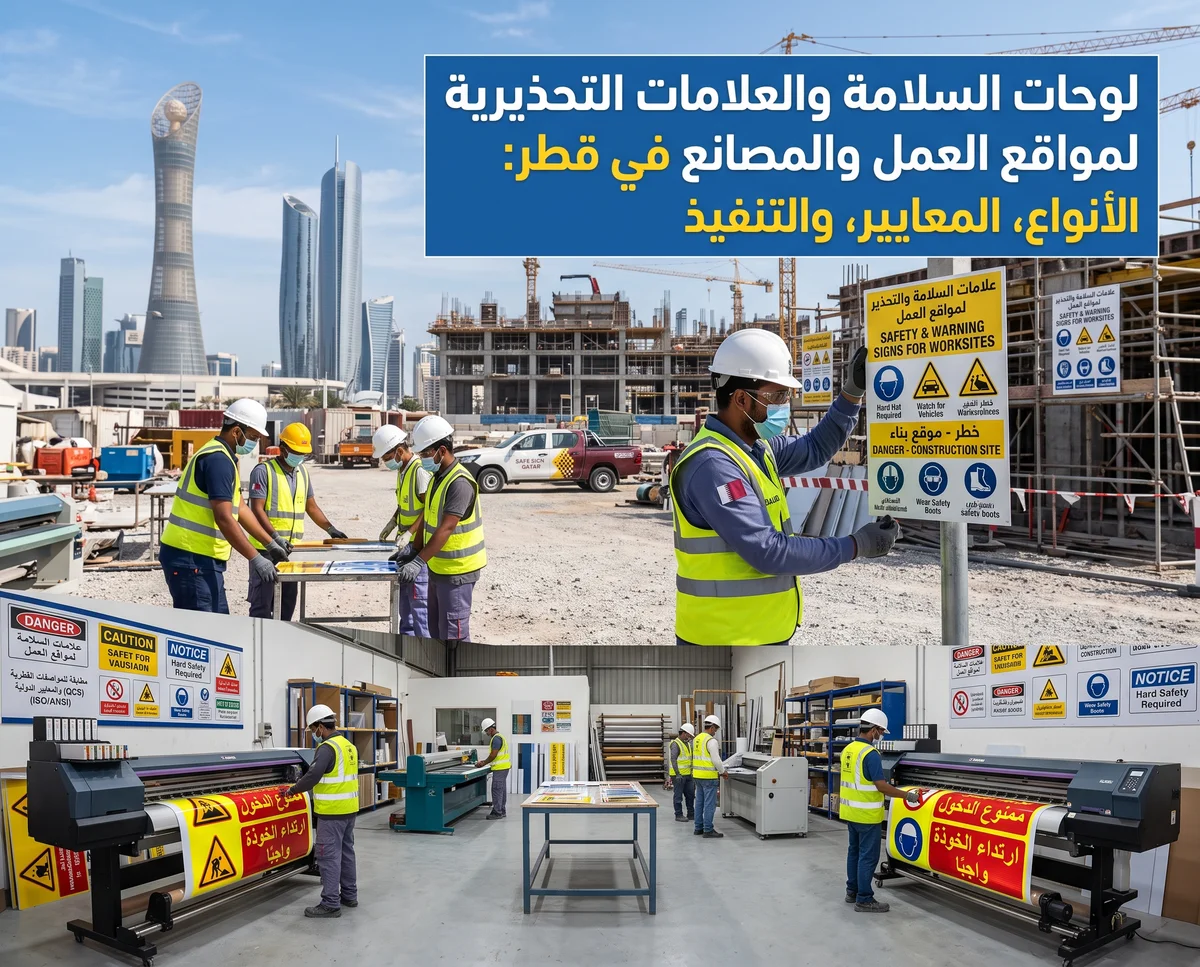
The reasons are practical and straightforward: the workforce on Jordanian sites spans many languages and experience levels, and a standard visual symbol is the fastest way to communicate a warning without anyone having to read a long block of text. On top of that, most contracts with main contractors and government bodies include HSE requirements that mandate specific signs at gates, hazard zones and emergency exits. Finally, a poorly printed sign that fades within weeks sends a negative message about how seriously a company takes safety — and costs you repeated reprints.
- Fewer incidents thanks to clear, instantly understood advance warning.
- Faster emergency response by marking exits, firefighting equipment and assembly points.
- Compliance with inspection and safety audit requirements on the project.
- Organised pedestrian and equipment movement on site, with fewer dangerous crossings.
Types of safety signs and warning signage
1. Prohibition signs
A red circle with a diagonal bar over a black symbol: no smoking, no entry for unauthorised personnel, no mobile phones, do not walk under suspended loads. These go at gates, entrances and sensitive storage areas.
2. Hazard warning signs
A yellow triangle with a black border: electrical hazard, hot surface, flammable materials, slippery floor, fall hazard, heavy equipment movement. Mount them as close as possible to the hazard source while keeping a safe viewing distance.
3. Mandatory and PPE signs
A blue circle with a white symbol: hard hat, goggles, gloves, ear plugs, safety boots, high-visibility vest. These are often produced as one large combined board at the site gate, commonly known as the "site entry requirements board".
4. Emergency and rescue signs
A green square: emergency exit, evacuation route, assembly point, first aid box, eye wash station. These are best produced in photoluminescent materials that glow in the dark along corridors and staircases.
5. Fire-fighting signs
A red square: fire extinguisher, fire hose, alarm bell, emergency contact point. Fit them above the equipment itself so they remain visible over racking and machinery.
6. Information boards and site policies
Such as the health, safety and environment policy board, emergency numbers board, incident log and safe-working-days board, and the project identification board. These are produced in large formats and designed to match your company's identity — exactly as with outdoor advertising signage.
Colours and symbols: no room for improvisation
Using standard pictograms (following the ISO 7010 reference widely applied on Jordanian projects) guarantees that a new worker understands the sign at first glance. The simple rule: red prohibits, yellow warns, blue instructs, green saves. The symbol must be the largest element on the sign, with the text beneath it in a smaller size than the symbol — never the other way round. A common mistake is designing a sign crowded with Arabic and English text and a tiny symbol in the corner; in practice, such a sign simply doesn't work from a few metres away.
The right materials for Jordan's climate
- Coated aluminium: the best choice for outdoor locations and gates; it withstands sun, humidity and dust for years.
- Acrylic: a smart look for offices, internal corridors and factory reception areas.
- Foamex (PVC foam): economical and lightweight, ideal for indoor use and warehouses.
- Durable adhesive vinyl: for application to doors, glass, machinery and tanks; explore the types of labels and stickers suited to each surface.
- Reflective and photoluminescent materials: essential for evacuation routes, night work and equipment traffic zones.
- Reinforced flex: for large boards on site hoarding and oversized safety policy boards.
Whatever the material, UV ink printing with a protective lamination layer is the difference between a sign that lasts for years and one that fades in a single summer. For more on this, see our guide to weather-resistant outdoor signage in Jordan.
Sizes and viewing distance
The practical rule: for every metre of required viewing distance, the symbol needs roughly 1 cm of height. So:
- 20×30 cm: for doors, corridors and short viewing distances (up to 5 metres).
- 30×40 cm: for workshops, warehouses and equipment areas.
- 60×90 cm or larger: for site gates and open areas.
- 120×240 cm and above: for safety policy boards and project boards on hoarding.
Installation and maintenance
The right sign in the wrong place is worthless. Fix signs at eye level (150–170 cm for pedestrians), higher along equipment routes, and away from spots where racking or open doors would block them. Use screws with spacers or aluminium frames for wall mounting, and free-standing frames or stands in open yards. It's good practice to schedule an inspection round every three months to replace any faded, scratched or loose signs, and to keep a documented list of all signs and their locations to make audits easier.
Common mistakes to avoid
- Printing signs on paper slipped into a plastic sleeve as a "temporary" fix that ends up staying for years.
- Using non-standard, low-resolution symbols pulled off the internet.
- Flooding the site with so many signs that they lose their warning value.
- Neglecting Arabic, or relying on a literal translation that nobody understands.
- Supplying low-resolution design files, which produce blurred symbols once enlarged.
How we deliver safety signage packages at EAPPress
We start by reviewing the list of required signs from your safety officer — or we help you build that list based on the nature of your operations. We then prepare vector design files with standard symbols and bilingual text, recommend the material and size for each installation point, and handle printing, cutting and installation across Amman and the rest of Jordan. We can also align the signage with your corporate identity so that your logo and colours appear on information boards, alongside the rest of your printed materials such as folders and official stationery, work permit forms and inspection reports.
Ready to equip your site with clear, durable safety signage? Send us your sign list or photos of the site and we'll prepare a complete quotation covering materials, sizes and installation costs. Get in touch with the EAPPress team on WhatsApp at +962 7 9821 5060 and we'll start today.
Prepare your request for EAPPress
Send a PDF artwork file with the final dimensions, quantity, material and finishing requirements. Mention any folding or cutting before approving the file. Review names, contact details and colours, then confirm the collection date once specifications are agreed.
Request an individual quote in Jordanian dinars based on your job. Contact EAPPress in Russeifa on WhatsApp +962 7 9821 5060, browse our printing services, or send your requirements through the contact page.
Frequently Asked Questions
What's the best material for safety signage inside factories in Jordan?
Should safety signs be in both Arabic and English?
What do the colours on safety signs mean?
How long does a safety signage package for a site in Amman take?
Need printing or advertising services in Jordan?
Contact EAPPress today for a free quote on your project in Amman and across Jordan.
Related Articles
Moving Your Business in Jordan: A Guide to Updating Your Printed Materials
Printing for Art Galleries in Jordan: EAPPress Guide
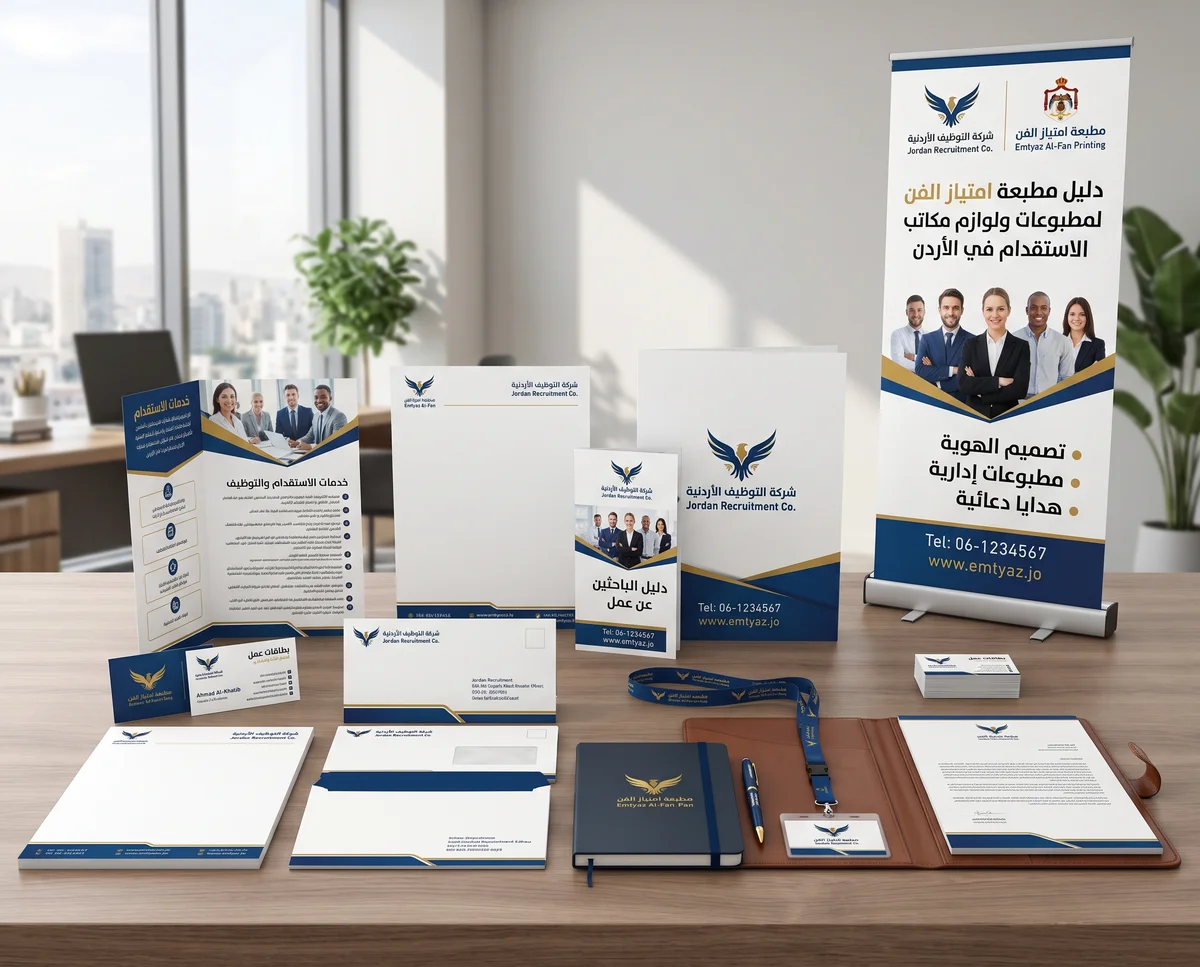
Printing Essentials for Recruitment Agencies and Manpower Offices in Jordan: EAPPress Guide