Pharmacy Printing & Supplies in Jordan: EAPPress Guide
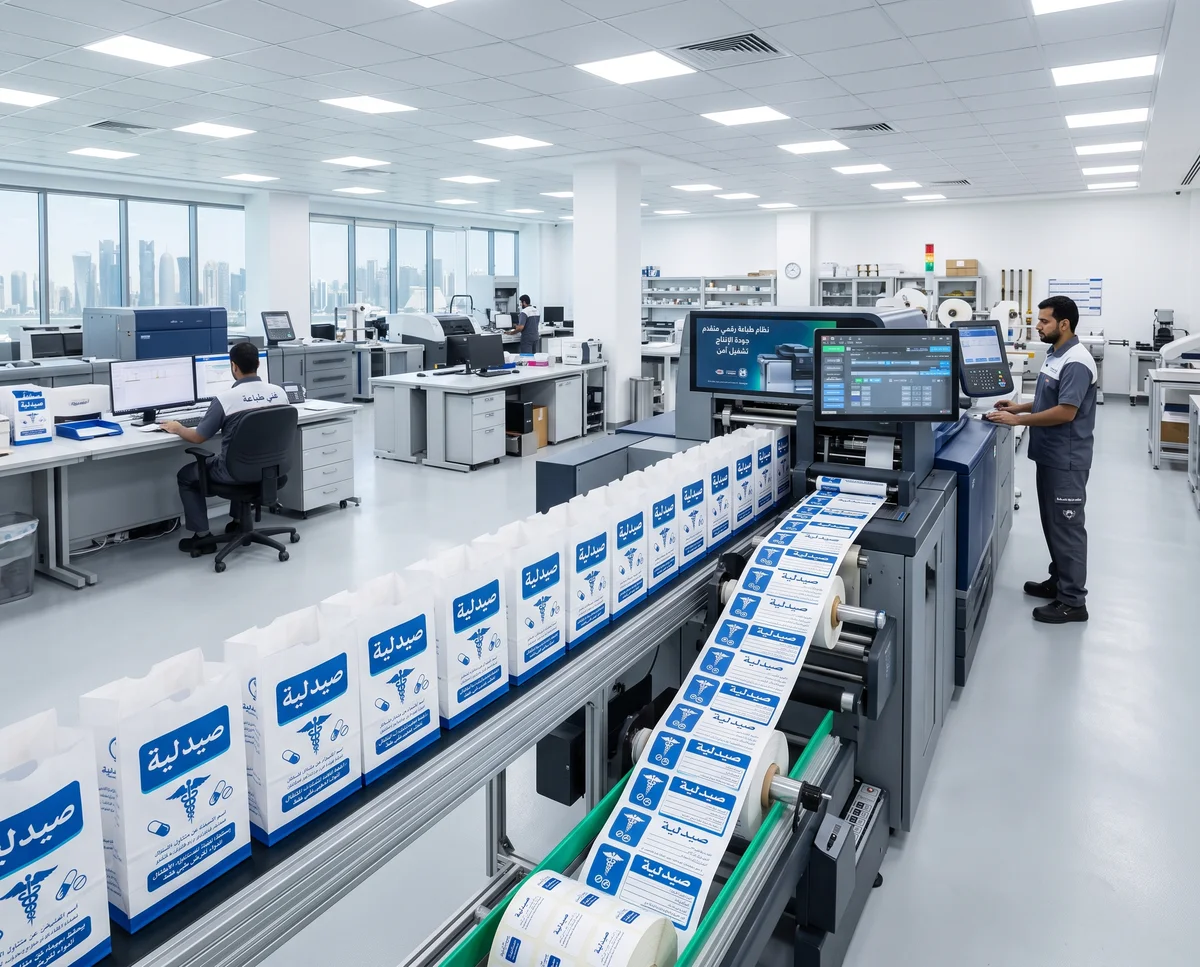
At EAPPress in Russeifa, Zarqa, print planning starts with the purpose of the finished piece and the available budget. This guide covers Pharmacy Printing & Supplies in Jordan and helps businesses in Jordan prepare a clear specification before requesting a quote.
1. Medication Dispensing Bags
The medicine bag is the print item that leaves your pharmacy most often every single day — a travelling advertisement carrying your name and phone number into every customer's home. It needs to be sturdy, cleanly printed and clear in its information.
- Small bag (daily dispensing): approximately 12×20 cm or 15×22 cm, 120 gsm white paper, one- or two-colour printing, with a blank area for writing the patient's name and usage instructions.
- Medium bag with handles: 22×28 cm, 150 gsm paper, ideal for multiple prescriptions and personal care products.
- Large bag: 30×40 cm, 170–200 gsm paper with a reinforced base and handles, for formula milk, nappies and heavier items.
- Delivery bags: moisture-resistant plastic or lined kraft, with a tamper-evident seal sticker showing the order hasn't been opened.
It's worth printing fixed instructions on the back of the bag, such as "Keep medicines out of the reach of children" and "Consult your pharmacist before combining medications" — this touch raises the professional impression considerably. Explore the options for custom paper bag manufacturing in a range of shapes and sizes.
2. Dosage Labels and Medication Instructions
The label applied to a medicine box is the single most important print item from a safety standpoint. It must be legible, stay firmly stuck, and resist rubbing inside a bag.
Common Label Types
- Standard dosage label: 5×3 cm or 7×4 cm, with fields for patient name, medicine name, dose, times per day, treatment duration and dispensing date.
- Colour-coded warning labels: small icons in distinctive colours such as "May cause drowsiness", "Take after food", "Keep refrigerated" and "Shake well before use".
- Thermal roll labels: printed directly from the pharmacy's printer, requiring label rolls sized to match the device and a strong adhesive material.
- Small logo stickers: 3–4 cm round labels for sealing bags or marking prepared packages.
We recommend a strong, moisture-resistant adhesive stock, especially for refrigerated medicines where condensation forms on the box and a weak adhesive causes the label to fall off. Review our options for labels and stickers.
3. Shelf Signage and In-Store Category Signs
Pharmacy customers are usually looking for a specific category in a hurry: painkillers, vitamins, skincare, mother and baby products. Clear category signage cuts search time and takes pressure off the pharmacist.
- Overhead aisle signs: acrylic or Foamex, 60–120 cm wide, with Arabic and English text in a large typeface readable from 5 metres away.
- Shelf-edge price cards: 8×4 cm or 10×6 cm, printed on board and slotted into plastic holders for easy changing.
- Promotion and discount cards: in a stand-out colour (red or yellow) so they contrast with the other cards and catch the eye immediately.
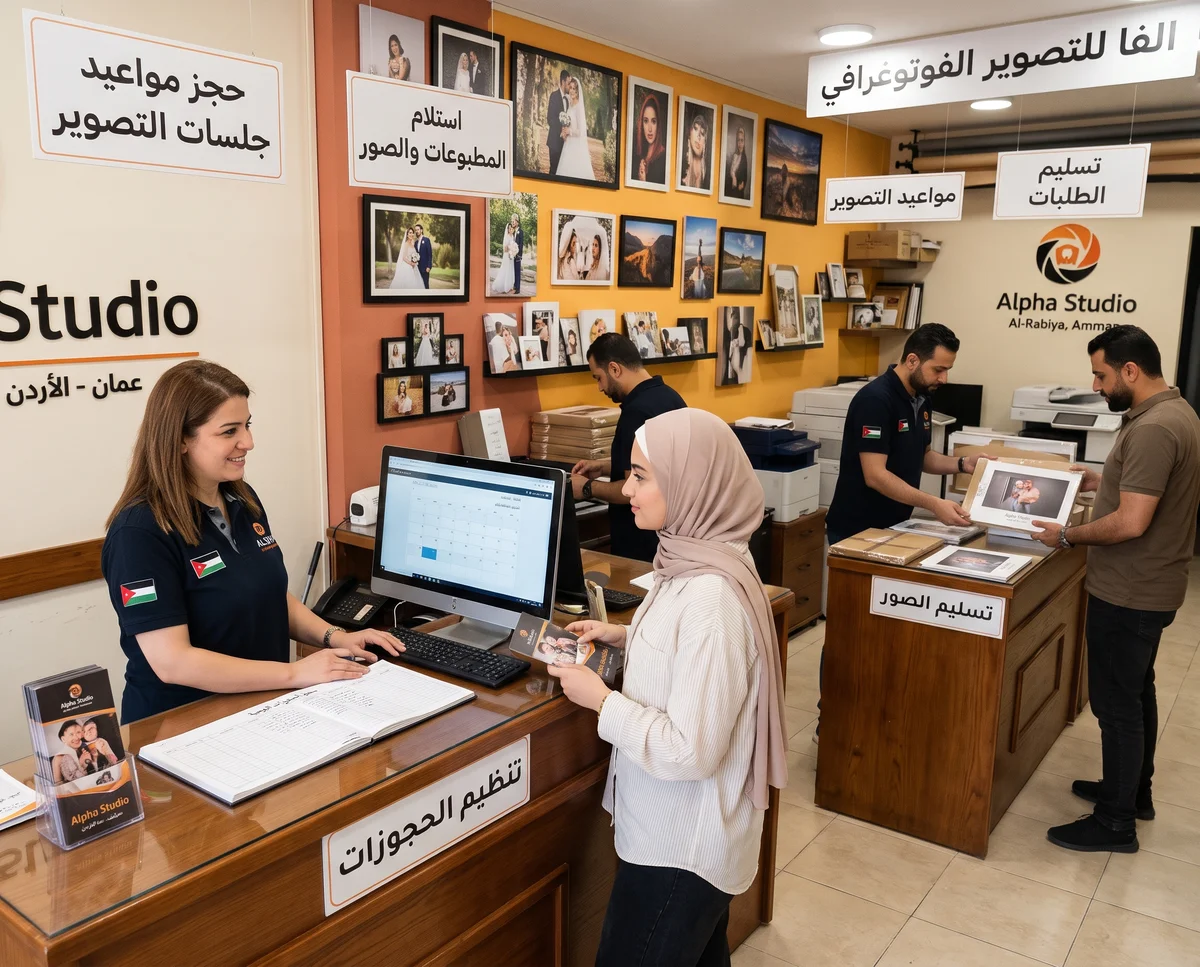
- Wayfinding and organisation signs: such as "Pharmacist Consultation Area", "Prescription Dispensing" and "Blood Pressure Check", to manage customer flow.
4. Customer Service and Loyalty Print
Successful pharmacies in Jordan rely on repeat customers more than passing trade, and print plays a direct role here:
- Loyalty and points cards: a business-card-sized card with stamp boxes or a barcode, encouraging repeat purchases.
- Prescription follow-up card: records the refill date for chronic medications — a service that patients with hypertension and diabetes genuinely appreciate.
- Awareness brochure: seasonal advice on flu, skincare during the Jordanian summer, or nutrition in Ramadan — reinforcing the pharmacy's image as a trusted health resource.
- Pharmacist's business card: carrying the name, WhatsApp number and opening hours, handed out with delivery orders.
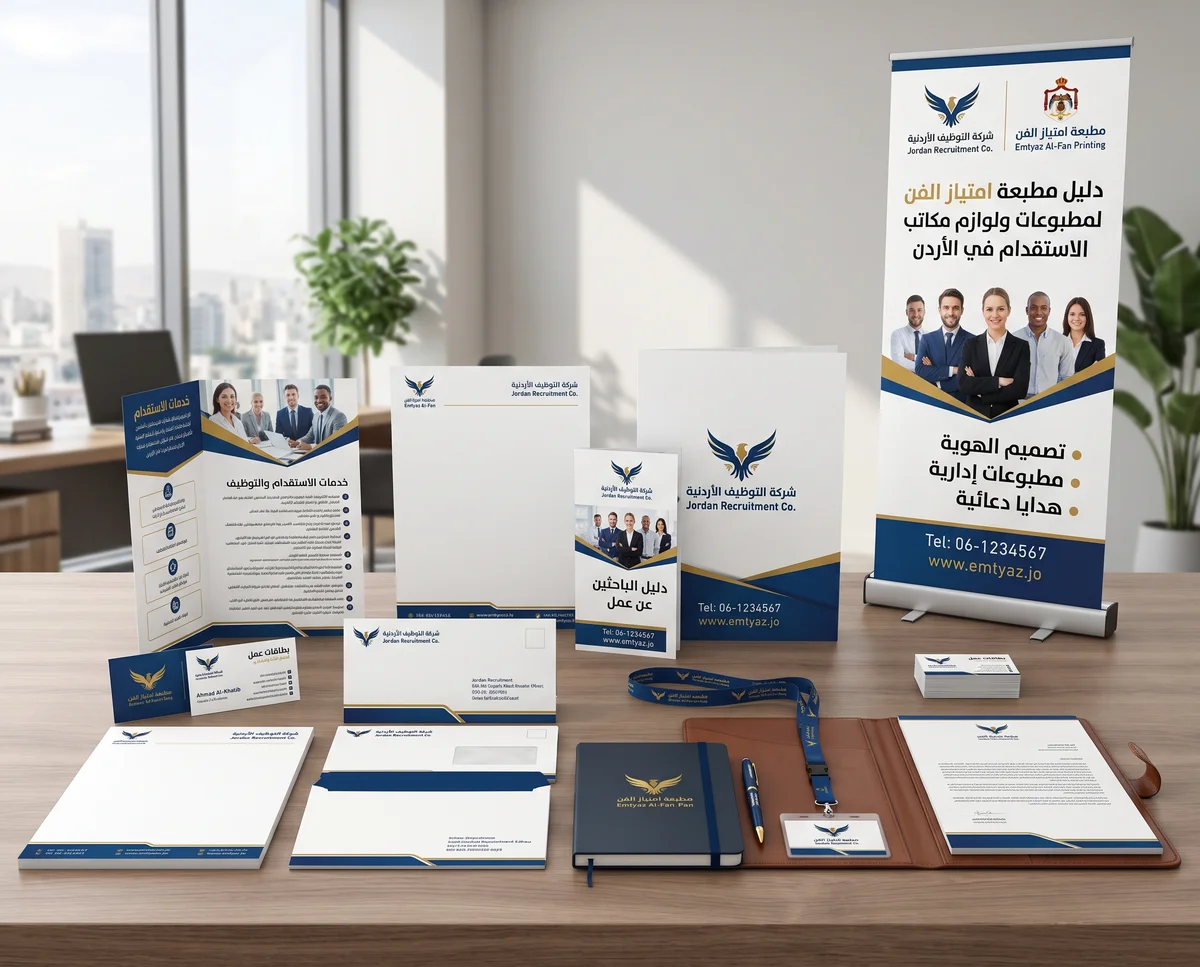
You can prepare all of these as one coordinated package alongside business cards in the pharmacy's own identity and colours.
5. Operational Documents, Stamps and Seals
The administrative side matters just as much, particularly when dealing with insurance companies and suppliers in Jordan:
- Numbered NCR carbonless invoices (two or three copies) for prescription dispensing and claims.
- Receipt vouchers and delivery notes for delivery orders across Amman.
- Letterheads and official envelopes for correspondence with suppliers and health authorities.
- An official pharmacy stamp plus a separate stamp for the pharmacist in charge, for approving prescriptions and invoices.
Design Tips Specific to Pharmacies
- Simplicity before beauty: clarity matters more than ornament; use legible typefaces and high contrast between text and background.
- Always bilingual: Arabic first, then English, to suit Jordan's diverse population.
- A calm colour palette: green, blue and white convey cleanliness and reassurance, with a single colour reserved for alerts.
- Leave white space: don't fill the bag or label with text; empty space makes the important information stand out.
- Consistency: the same logo, the same font and the same colour across the bag, the label, the sign and the invoice.
- Smart batch printing: print fixed items in large quantities to reduce cost, and leave variable items (prices and offers) to fast digital printing.
Why EAPPress for Your Pharmacy's Printing in Jordan?
At EAPPress we treat pharmacy printing as one complete system: we start by reviewing your pharmacy's brand identity — or creating it from scratch — then produce the bags, labels, shelf signage and operational documents to a single, consistent specification. We serve pharmacies in Amman, Zarqa, Irbid, Salt, Madaba and every region of Jordan, with fast-turnaround options for repeat orders and support on reprints using the same files and specifications, with no need to start over.
Ready to upgrade your pharmacy's printed materials and unify its identity professionally? Get in touch with the EAPPress team on WhatsApp at +962 7 9821 5060, send us your logo and requirements, and we'll prepare a detailed quotation for every item along with material samples suited to Jordan's working environment.
Prepare your request for EAPPress
Send a PDF artwork file with the final dimensions, quantity, material and finishing requirements. Mention any folding or cutting before approving the file. Review names, contact details and colours, then confirm the collection date once specifications are agreed.
Request an individual quote in Jordanian dinars based on your job. Contact EAPPress in Russeifa on WhatsApp +962 7 9821 5060, browse our printing services, or send your requirements through the contact page.
Frequently Asked Questions
What's the best material for pharmacy medicine bags in Jordan?
Can dosage labels be printed in both Arabic and English?
What shelf label size works best for pharmacies?
How long does a complete pharmacy print order take?
Need printing or advertising services in Jordan?
Contact EAPPress today for a free quote on your project in Amman and across Jordan.