Managing Print Stock and Reorders: A Practical Guide for Businesses in Jordan
A store may have to pause packing an order because it has run out of the right bag size. An employee may discover that the remaining invoice books will not cover upcoming work. Meanwhile, boxes of business cards can sit unused after a phone number changes. Managing print stock helps businesses in Jordan handle these everyday details more clearly. Whether your business is in Amman, Zarqa, or Russeifa, start by knowing what you have, what you use, and when to reorder. This guide outlines a straightforward approach using a tracking sheet and an assigned person.
Start by Grouping Stock by Use
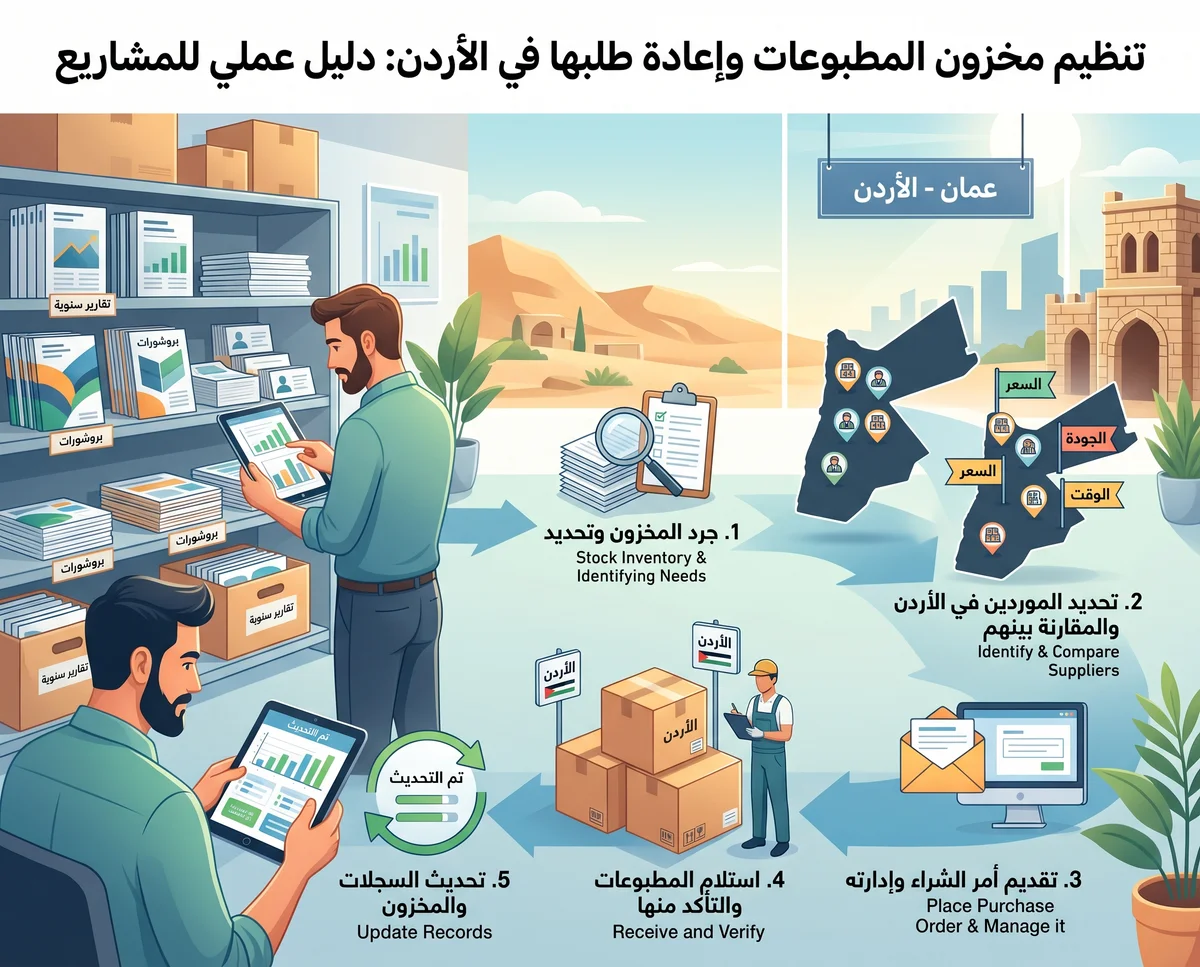
List the printed materials you physically have, then separate items that look similar but serve different purposes. Small bags cannot always replace large ones, and a sticker naming one product cannot replace another product’s label. Record each size and design separately, distinguishing usable stock from outdated, damaged, or reserved materials. Your stock balance should show what your team can actually use today.
- Regular consumables: invoices, receipts, bags, and packaging labels.
- Person-specific materials: business cards carrying an employee’s name and details.
- Date-specific materials: wedding invitations and temporary promotion stickers.
- Reusable tools: stamps & seals that need checks for condition and impression clarity.
Create a Stock Record for Each Item
You do not need a complicated system to begin. A shared spreadsheet can record the item name, storage location, counting unit, available quantity, and last count date. Add the person responsible for updates, the design version, and notes on material or size. If stock is split between a storeroom and a sales counter, record each location’s balance so you do not reorder while unopened supplies are sitting elsewhere.
Use a Consistent Counting Unit
Choose a unit everyone understands, such as a bag, card, or book. When tracking invoices and receipts, record the book specifications too: comparing book counts alone can be misleading when they contain different numbers of sets. If you count stickers by the roll, record the number of labels per roll according to the order specifications. This keeps recording differences from inflating or understating your stock.
Base Your Reorder Point on Actual Usage
Track quantities used over equal periods, then calculate average daily or weekly consumption. Your reorder point is expected usage during the order lead time, plus a buffer chosen to reflect fluctuations in your business. Use the lead time agreed with the printing company for the new order, including design review and finishing where needed. Avoid waiting until stock reaches zero, and do not assume every item takes the same time to prepare.
As a hypothetical example only, a store using forty bags a week would need eighty bags to cover an agreed two-week lead time before adding its buffer. These figures are neither a recommended purchase quantity nor a promised production schedule. Replace them with your own usage and confirmed lead time, and revisit the calculation before seasonal demand or the opening of another sales location.
Separate Buffer Stock from Order Quantity
Buffer stock covers unexpected increases in use or preparation delays. Order quantity is how much you decide to buy next. You might reach your reorder point but choose a small batch because your business address will change soon. A frequently used item with stable details may justify a larger quantity. Base the decision on consumption, storage space, and the likelihood of design changes, and discuss each item’s quantity separately.
Check the Details Before Approving a Reprint
“Same as the last order” can overlook details that have changed. Open the approved design and review it with the person who uses the printed item every day. For business cards, check the name, job title, and contact information. For bags and stickers, confirm that the logo and address remain correct. Keep a clearly named final file with its approval date, and store drafts away from the folder used to submit orders.
- Check numbers and addresses in both Arabic and English when both languages appear.
- Match dimensions, material, and finishing to the intended use, rather than relying on the filename.
- Test any printed QR code to confirm that it opens the intended destination.
- Specify quantities for each version or branch and record who approved them.
Match Stock Planning to Each Item’s Lifecycle
Business card details need checking before increasing stock, while bags require attention to the sizes used most often. When ordering labels and stickers, distinguish fixed design elements from information that changes between products or batches. You can discuss leaving a designated area for variable information during graphic design, provided the method of adding it suits the material and intended use.
Wedding invitations depend on the guest list and whether cards are distributed to households or individuals, so they should not be treated as recurring stock. Check names, the date, and the venue before approval, and choose extras according to your distribution plan. For stamps & seals, monitor impression clarity, the accuracy of the details, and the tool’s condition. Inspect them periodically and discuss maintenance or replacement when a problem appears, rather than counting them as daily paper consumption.
Organize Receiving, Storage, and Issuing
When an order arrives, compare its items, quantities, and designs with the order details, and inspect samples from the packages before distributing them internally. Label each box with the item name, version, and receipt date. Keep printed materials in a clean, dry place away from direct sunlight, following any material-specific instructions provided. Use older stock first while its details remain valid, and isolate withdrawn versions so they are not used accidentally.
- Update balances when stock arrives and when materials move between locations.
- Set a review schedule that suits each item’s rate of use.
- Record why materials are removed from usable stock, such as storage damage or changed details.
- Compare recorded balances with a physical count before submitting a new order.
Prepare a Clear Brief for Your Printing Company
Send a list specifying each printed item, its dimensions, quantity, approved version, and required date. Include a photo or sample of the previous order if it helps explain the request, and clearly identify any changes. If your list includes paper and cardboard bags, describe the products they will hold and provide their dimensions so you can discuss a suitable size before production.
To plan your next order of business cards, invoices, stickers, bags, wedding invitations, or stamps & seals, contact Emtiaz Al Fan printing company in Russeifa, Zarqa, Jordan on WhatsApp at +962 7 9821 5060. Send your item list, quantities, and requested changes to discuss design and printing options for your business in Amman or any city in Jordan.
Frequently Asked Questions
When should I reorder bags or invoice books?
Can I simply reprint the previous design?
How can I track print stock without specialist software?
Should wedding invitations and business cards be managed the same way?
Need printing or advertising services in Jordan?
Contact EAPPress today for a free quote on your project in Amman and across Jordan.